
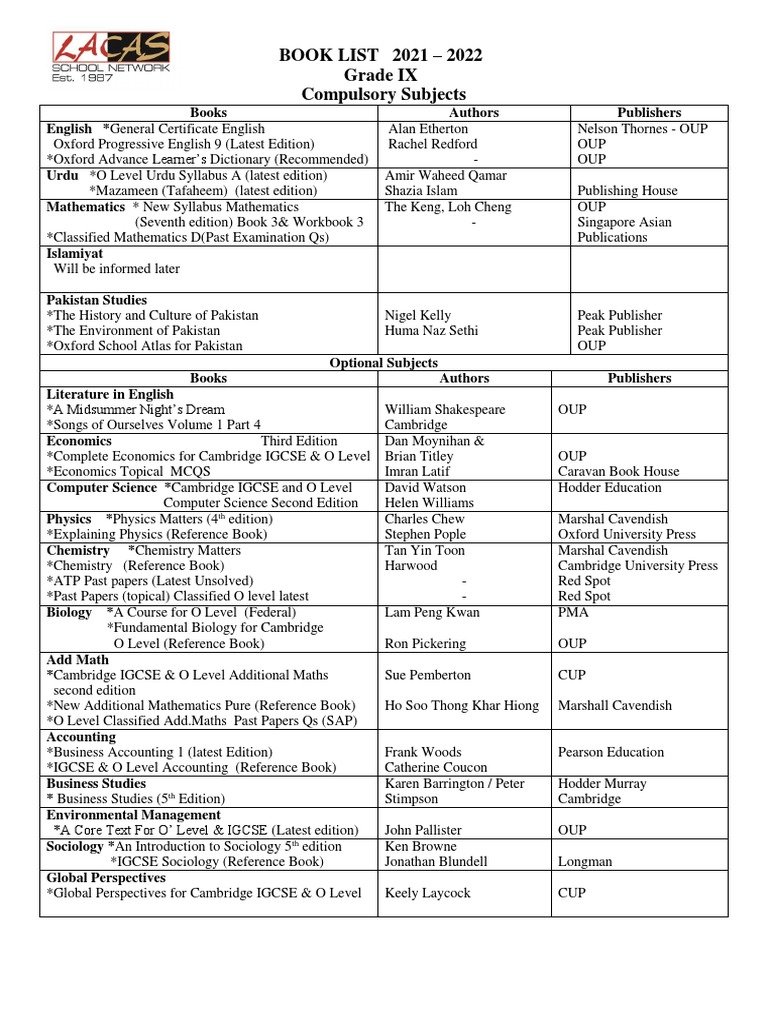
Science students must master a diverse range of subjects to excel. The 9 compulsory subjects for science students are the cornerstone of a well-rounded education. From biology to physics, these subjects lay the foundation for a successful career in the sciences. Understanding the importance of each subject is crucial for aspiring scientists. Let’s delve into the key subjects that every science student should prioritize.

9 Compulsory Subjects for Science Students
Welcome, aspiring scientists! If you’re passionate about the wonders of the natural world and the mysteries of the universe, then you’re in the right place. As a science student, you’ll embark on a fascinating journey of discovery and learning. To help you navigate this exciting path, we’ve compiled a list of 9 compulsory subjects that every science student should master. Let’s dive in!
1. Biology
Biology is the study of living organisms and their interactions with each other and the environment. From microscopic cells to complex ecosystems, biology covers a wide range of topics. As a science student, understanding biology is essential for grasping the fundamental principles of life and evolution.
The Fascinating World of Cells
Cells are the building blocks of life. In biology class, you’ll learn about the different types of cells, their structures, and functions. From single-celled organisms to multicellular organisms like humans, cells play a crucial role in all living things.
Exploring Biodiversity
Biodiversity refers to the variety of life forms on Earth. In biology lessons, you’ll discover the amazing diversity of plants, animals, and microorganisms that inhabit our planet. Understanding biodiversity is key to conserving and protecting the environment.
2. Chemistry
Chemistry is the study of matter and the changes it undergoes. From the composition of substances to chemical reactions, chemistry provides insights into the structure of the world around us. As a science student, a solid foundation in chemistry is vital for understanding the physical and chemical properties of matter.
The Periodic Table of Elements
The periodic table is a visual representation of all known chemical elements. In chemistry class, you’ll learn about the properties of different elements, their atomic structures, and how they combine to form compounds. The periodic table serves as a roadmap to the building blocks of the universe.
Chemical Reactions and Energy
Chemical reactions involve the transformation of substances into new forms. By studying chemical reactions, you’ll uncover how energy is transferred and conserved in different processes. Understanding the principles of chemical reactions is essential for a wide range of scientific disciplines.
3. Physics
Physics is the study of matter, energy, and the fundamental forces that govern the universe. From the motion of objects to the behavior of particles at the subatomic level, physics offers profound insights into the nature of reality. As a science student, mastering the principles of physics is crucial for exploring the laws of nature.
Newtons’s Laws of Motion
Newtons’s laws of motion describe the relationship between an object and the forces acting upon it. In physics class, you’ll learn how these laws govern the motion of everyday objects and celestial bodies. Understanding Newton’s laws is essential for analyzing the dynamics of the physical world.
Theories of Relativity
Einstein’s theories of relativity revolutionized our understanding of space and time. By studying relativity in physics, you’ll explore the interplay between matter, energy, and the fabric of the universe. Delving into the theories of relativity opens up new perspectives on the nature of reality.
4. Mathematics
Mathematics is the language of science. From calculating the movement of planets to analyzing the growth of populations, mathematics underpins all scientific disciplines. As a science student, developing strong mathematical skills is essential for formulating hypotheses, conducting experiments, and interpreting data.
Algebra and Equations
Algebra is a branch of mathematics that deals with symbols and the rules for manipulating them. In math class, you’ll learn how to solve equations, factor polynomials, and work with mathematical expressions. Mastering algebraic concepts is crucial for tackling complex scientific problems.
Statistics and Probability
Statistics is the science of collecting, analyzing, and interpreting data. By studying statistics in mathematics, you’ll learn how to draw meaningful conclusions from experimental results and observations. Understanding statistics and probability is essential for making informed decisions in scientific research.
5. Environmental Science
Environmental science is the study of the interactions between humans and the natural environment. From climate change to biodiversity conservation, environmental science addresses pressing issues that affect our planet. As a science student, gaining insights into environmental science is crucial for promoting sustainability and protecting ecosystems.
Climate Change and Global Warming
Climate change refers to long-term shifts in temperature patterns, leading to global warming. In environmental science class, you’ll explore the causes and consequences of climate change, as well as potential solutions to mitigate its impact. Understanding climate change is vital for addressing one of the most significant challenges facing humanity.
Sustainable Development and Conservation
Sustainable development aims to meet the needs of the present without compromising the ability of future generations to meet their own needs. By studying conservation in environmental science, you’ll discover strategies for preserving natural resources and protecting endangered species. Embracing sustainability is essential for creating a harmonious relationship between humans and the environment.
6. Computer Science
Computer science is the study of algorithms, data structures, and computational processes. From programming languages to artificial intelligence, computer science plays a crucial role in advancing scientific research and technological innovation. As a science student, gaining proficiency in computer science is essential for harnessing the power of technology in your studies.
Programming and Coding
Programming involves writing instructions for computers to execute tasks. In computer science class, you’ll learn programming languages like Python, Java, and C++ to develop software applications and analyze scientific data. Mastering programming skills opens up new possibilities for modeling complex systems and conducting simulations.
Data Analysis and Machine Learning
Data analysis involves extracting insights from large datasets to uncover patterns and trends. By studying machine learning in computer science, you’ll explore algorithms that enable computers to learn from data and make predictions. Embracing data analysis and machine learning is essential for conducting cutting-edge research in science.
7. Astronomy
Astronomy is the study of celestial objects, space, and the universe as a whole. From distant galaxies to black holes, astronomy offers a glimpse into the vastness of the cosmos. As a science student, exploring the wonders of astronomy can ignite your curiosity about the mysteries of the universe.
Stellar Evolution and Cosmology
Stellar evolution traces the life cycle of stars, from their formation to their eventual fate. In astronomy class, you’ll delve into the processes that govern the birth and death of stars, as well as the evolution of galaxies. Understanding stellar evolution and cosmology unveils the intricate dance of celestial bodies in the cosmos.
The Search for Extraterrestrial Life
The quest for extraterrestrial life captivates the imagination of scientists and enthusiasts alike. By studying astrobiology in astronomy, you’ll explore the conditions that could support life beyond Earth and the methods for detecting potential extraterrestrial civilizations. Engaging in the search for extraterrestrial life opens up new frontiers of exploration and discovery.
8. Geology
Geology is the study of the Earth’s physical structure, composition, and history. From rocks and minerals to earthquakes and volcanoes, geology provides insights into the dynamic processes that shape our planet. As a science student, understanding geology is essential for unraveling the mysteries of Earth’s past and present.
Plate Tectonics and Earthquakes
Plate tectonics is the theory that describes the movement of Earth’s lithosphere. In geology class, you’ll learn about the interactions between tectonic plates, leading to phenomena like earthquakes and volcanic eruptions. Understanding plate tectonics is crucial for predicting geological hazards and mitigating their impact on human populations.
Rocks, Minerals, and Fossils
Rocks, minerals, and fossils provide clues about the Earth’s history and evolution. By studying rocks and minerals in geology, you’ll unravel the processes that have shaped the planet over millions of years. Exploring rocks, minerals, and fossils offers a window into the ancient landscapes and ecosystems that once thrived on Earth.
9. Genetics
Genetics is the study of heredity and variation in living organisms. From DNA structure to gene expression, genetics explores the mechanisms that determine an organism’s traits. As a science student, del
How to Ace Your Next Science Exam
Frequently Asked Questions
What are the 9 compulsory subjects for science students?
For science students, the 9 compulsory subjects typically include mathematics, physics, chemistry, biology, English, computer science, environmental studies, physical education, and a modern foreign language.
How do these 9 subjects benefit science students?
These subjects provide a well-rounded education that enhances critical thinking, problem-solving skills, scientific knowledge, research abilities, communication skills, and overall academic proficiency required in various scientific fields.
Why is it important for science students to study English as a compulsory subject?
Studying English helps science students improve their communication skills, both written and verbal, which are crucial for presenting research findings, writing reports, interacting with colleagues, and publishing scientific papers in international journals.
Final Thoughts
In conclusion, science students must focus on mastering 9 compulsory subjects to excel in their studies. These subjects, including mathematics, biology, chemistry, and physics, provide a solid foundation for scientific exploration. By understanding these core subjects, students can develop critical thinking skills and problem-solving abilities essential for success in the field. Ultimately, proficiency in the 9 compulsory subjects for science students is key to pursuing a fulfilling career in various scientific disciplines.


