
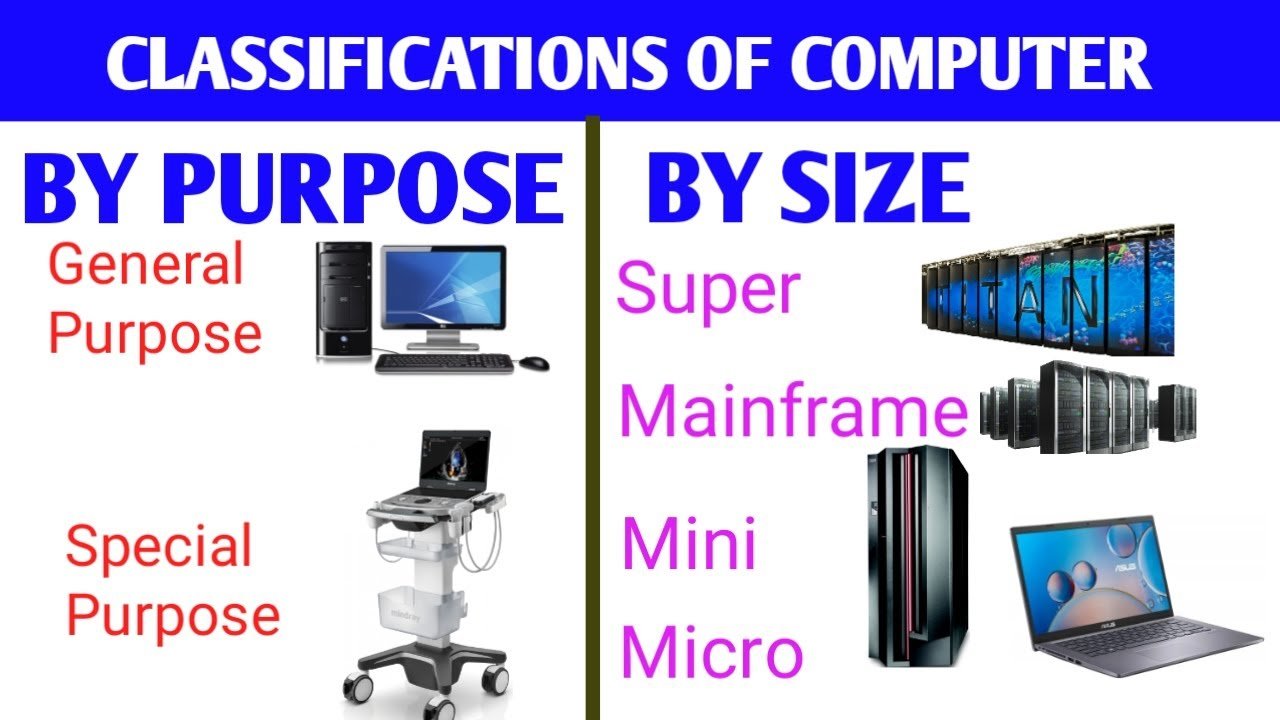
Computers are multifaceted tools that serve various functions based on their design and capabilities. Classification of computers by purpose categorizes them into specific groups tailored for distinct tasks. From powerful supercomputers analyzing complex data to compact laptops for everyday use, each type fulfills a unique role in the digital landscape. Understanding these classifications can help users choose the right device that aligns with their needs and maximizes efficiency. Discover the diverse world of computers categorized by purpose and unlock their potential for productivity, innovation, and enjoyment.

Classification of Computers by Purpose
Welcome to our exciting journey into the world of computers! Have you ever wondered why there are so many different types of computers? Well, today we are going to delve into the fascinating topic of computer classification based on their purpose. Let’s explore the incredible diversity of these amazing machines and how they are designed to meet specific needs.
The Importance of Classifying Computers
Computers come in all shapes and sizes, each serving a unique purpose in our digital world. Understanding the classification of computers is important because it helps us identify which type of computer is best suited for specific tasks. By knowing the purpose of a computer, we can make informed decisions when choosing the right device for our needs.
Personal Computers (PCs)
One of the most common types of computers is the personal computer, or PC for short. PCs are designed for individual use and can be found in homes, offices, schools, and just about everywhere you go. These versatile machines are used for a wide range of tasks, from browsing the internet and sending emails to creating documents and playing games.
PCs come in different forms, including desktop computers, laptops, and tablets. Desktop computers are the traditional type of PC with a separate monitor, keyboard, and mouse. Laptops are portable computers that combine all components into a single device. Tablets are touchscreen devices that are lightweight and easy to carry around.
Desktop Computers
Desktop computers are great for tasks that require a lot of processing power, such as video editing, graphic design, and gaming. They typically have more storage space and can be easily upgraded with additional components like a faster processor or more memory.
Laptops
Laptops are perfect for users who need a computer on the go. Whether you’re a student working on a school project or a business professional attending a meeting, laptops provide the flexibility to work from anywhere. With advancements in technology, laptops now offer powerful performance in a compact design.
Tablets
Tablets have become increasingly popular due to their convenience and portability. They are ideal for tasks like reading e-books, watching videos, and browsing the web. Many tablets also support stylus pens for note-taking and drawing, making them versatile devices for creative individuals.
Server Computers
While personal computers are designed for individual use, server computers are built to handle the heavy lifting of serving multiple users or devices. Servers are commonly used in businesses, schools, and data centers to store and manage large amounts of data, host websites, and run applications that require high performance.
Servers come in various types, including file servers, web servers, and database servers. Each type of server is optimized for specific tasks, such as storing files, hosting websites, or managing data efficiently.
File Servers
File servers are dedicated to storing and managing files that can be accessed by multiple users on a network. They provide a centralized location for storing documents, photos, videos, and other data, making it easy for users to collaborate and share information.
Web Servers
Web servers are responsible for hosting websites and web applications on the internet. When you visit a website, your browser communicates with a web server to retrieve and display the web pages. Web servers are designed to handle a large number of requests simultaneously to ensure fast and reliable access to websites.
Database Servers
Database servers play a crucial role in storing and managing data for applications and websites. They are optimized for handling complex queries and transactions, making them essential for running dynamic websites and applications that rely on real-time data processing.
Embedded Computers
Embedded computers are specialized devices that are designed to perform specific functions within a larger system. Unlike personal computers or servers, embedded computers are typically hidden inside other devices and operate behind the scenes to control and monitor various processes.
Embedded computers can be found in a wide range of devices, including smartphones, smart appliances, digital cameras, and automobile systems. These devices rely on embedded computers to provide functionality and automation for specific tasks.
Smartphones
Smartphones are a common example of devices that use embedded computers. These pocket-sized devices are packed with sensors, processors, and software that enable us to make calls, send messages, take photos, and access the internet on the go. The embedded computers in smartphones help us stay connected and organized in our daily lives.
Smart Appliances
Smart appliances, such as smart refrigerators, thermostats, and security cameras, use embedded computers to offer advanced features and connectivity. These devices can be controlled remotely via a smartphone or a voice assistant, allowing users to monitor and manage their homes efficiently.
Automobile Systems
Modern cars are equipped with embedded computers that power various systems, including navigation, entertainment, safety, and engine management. These computers play a vital role in enhancing the driving experience, improving fuel efficiency, and ensuring the safety of passengers on the road.
Supercomputers
Supercomputers are the powerhouse of the computing world, capable of processing massive amounts of data at blistering speeds. These high-performance machines are used for complex calculations, simulations, scientific research, and weather forecasting.
Supercomputers are typically found in research institutions, government agencies, and universities that require immense computational power for cutting-edge projects. These machines are designed with special architectures and components to deliver unmatched performance for the most demanding computational tasks.
Scientific Research
Supercomputers are essential for scientific research in fields such as physics, chemistry, biology, and astronomy. Researchers use supercomputers to simulate complex phenomena, analyze vast datasets, and model intricate systems that would be impossible to study with traditional computers.
Weather Forecasting
Weather forecasting relies on supercomputers to run sophisticated models that predict atmospheric conditions and phenomena. By processing immense amounts of meteorological data, supercomputers help meteorologists issue accurate weather forecasts and warnings to protect lives and property from natural disasters.
Cybersecurity
Supercomputers play a crucial role in cybersecurity by analyzing network traffic, identifying threats, and developing advanced encryption algorithms. In an increasingly interconnected world, supercomputers are essential for protecting sensitive information, securing communication channels, and defending against cyber attacks.
As we wrap up our exploration of computer classification by purpose, we have learned about the diverse types of computers that exist to serve various needs in today’s digital landscape. Whether it’s a personal computer for everyday tasks, a server for managing data, an embedded device for automation, or a supercomputer for advanced research, each type of computer plays a vital role in shaping our technological world.
Next time you interact with a computer, take a moment to appreciate the incredible complexity and versatility of these amazing machines. Remember that behind every device, there is a purpose-driven design that enables us to work, play, learn, and explore in ways we never thought possible. Computers truly are remarkable inventions that continue to evolve and enrich our lives in countless ways!
Thank you for joining us on this enlightening journey into the classification of computers by purpose. Stay curious, keep exploring, and embrace the endless possibilities that technology has to offer!
Classifications of computer by Purpose and Size
Frequently Asked Questions
What are the main types of computers based on their purpose?
Computers are typically classified based on their purpose into three main categories: personal computers, servers, and supercomputers. Personal computers are designed for individual use, while servers are used to manage network resources and provide services. Supercomputers, on the other hand, are extremely powerful machines used for complex calculations and simulations.
How do personal computers differ from servers in terms of purpose?
Personal computers are intended for personal use, such as browsing the internet, creating documents, and gaming. In contrast, servers are designed to store, manage, and process data shared across a network, providing functionalities like hosting websites, managing emails, and storing files centrally for multiple users.
What are the key characteristics of supercomputers in relation to their purpose?
Supercomputers are distinguished by their exceptional processing power and speed, enabling them to perform complex calculations and simulations that require massive computational resources. They are used for tasks such as weather forecasting, scientific research, and nuclear simulations that demand high-speed processing and massive data handling capabilities.
Final Thoughts
In conclusion, understanding the classification of computers by purpose is crucial for selecting the right device. Computers are categorized into different types based on their intended use, such as personal computers, servers, and embedded systems. By identifying the purpose of a computer, users can optimize their technology for specific tasks and achieve optimal performance. It is important to consider the intended function of a computer before making a purchase to ensure that it meets the desired requirements.


